Hilti Group Achieves Sales of 6.3 Billion in 2025

In a year marked by ongoing global uncertainty, the Hilti Group navigated the radically changed tariff environment, drove productivity in operations and continued to invest significantly in its Lead 2030 strategy.

Group in Numbers
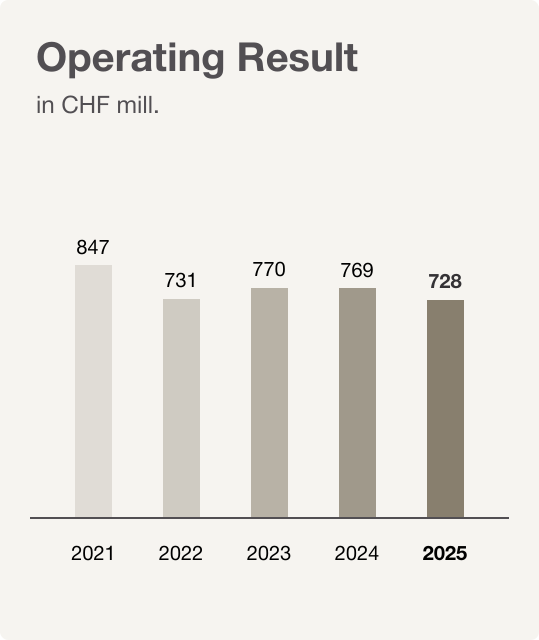
Bar chart for the last 5 years of operating result in CHF mill.: 2021: 847; 2022: 731; 2023: 770; 2024: 769; 2025: 728
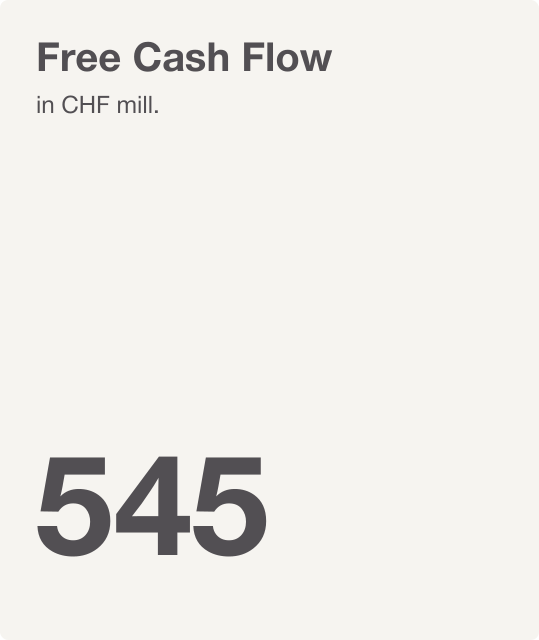
Free Cash Flow in CHF, mill. 545
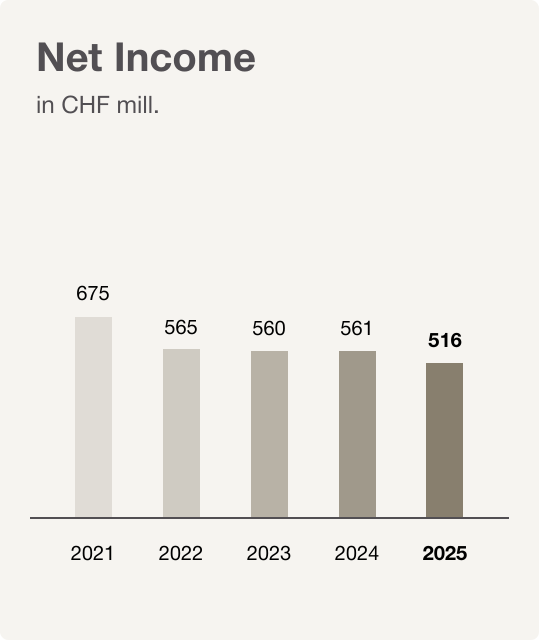
bar chart for the last 5 years of netcome in CHF mill.: 2021: 675; 2022: 565; 2023: 560; 2024: 561; 2025: 516;
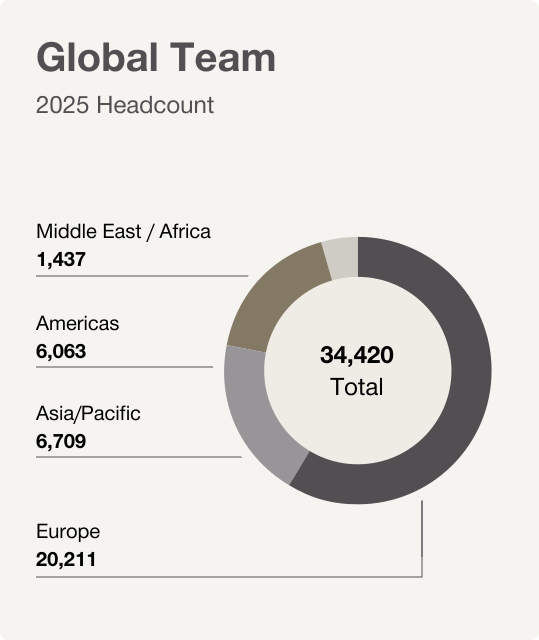
Global Team Headcount 2025: Pie chart with four segments and 34,420 in total. Segments: 1,437 Middle East/Africa, 6,063 Americas, 6,709 Asia/Pacific, 20,211 Europe
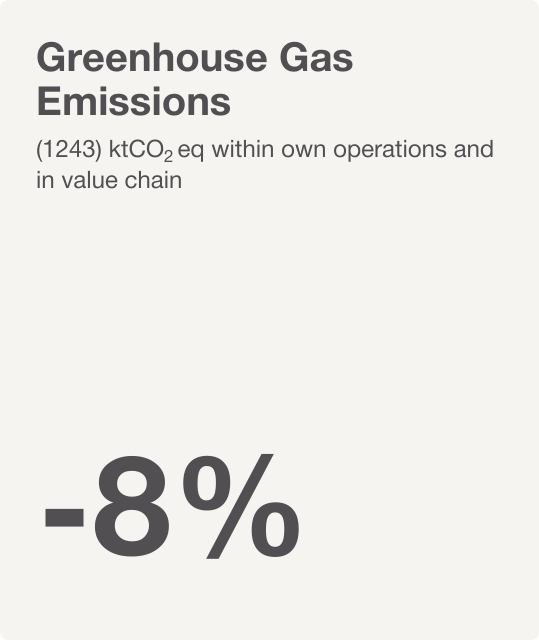
Greenhouse Gas Emissions (1243) ktCO2 eq within own operations and in value chain: -8%
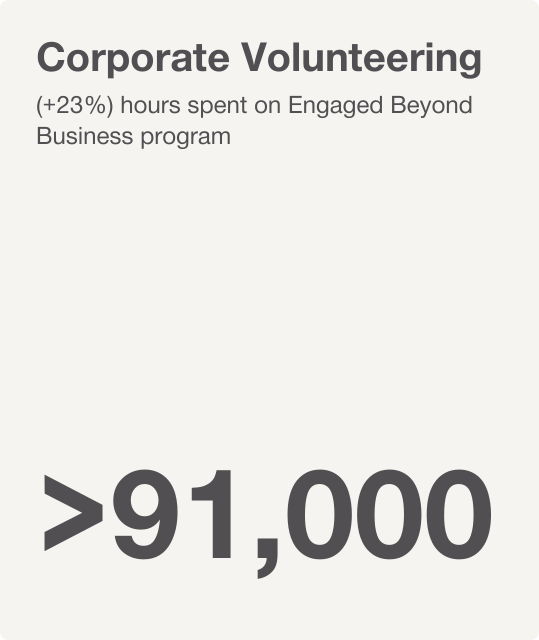
Corporate Volunteering (+23%) hours spent on Engaged Beyond Business program  >91,000

Sales grew 1.9 percent in local currencies in 2025. The strong appreciation of the Swiss franc led to a negative currency effect of 4.0 percentage points on sales. In total, Hilti reported sales of CHF 6.3 billion for the 2025 business year (-2.1%). The operating result reached CHF 728 million, a decline of 5.3 percent compared to the previous year. Despite diligent cost management, the ongoing strength of the Swiss franc and a soft market environment in Europe and parts of Asia led to this result. 

Sales in the Americas region grew strongly, by 9.3 percent in local currencies. The business delivered solid double-digit growth in the U.S. market despite the dynamic tariff environment. In Europe, sales decreased in local currencies (-1.9%) in an overall soft construction market. The Middle East / Africa region reported growth of 12.9 percent in local currencies, driven by growing construction activity in the Middle East. Sales in the Asia/Pacific region declined by 2.1 percent in local currencies, mainly due to the challenging environment in North Asia. 

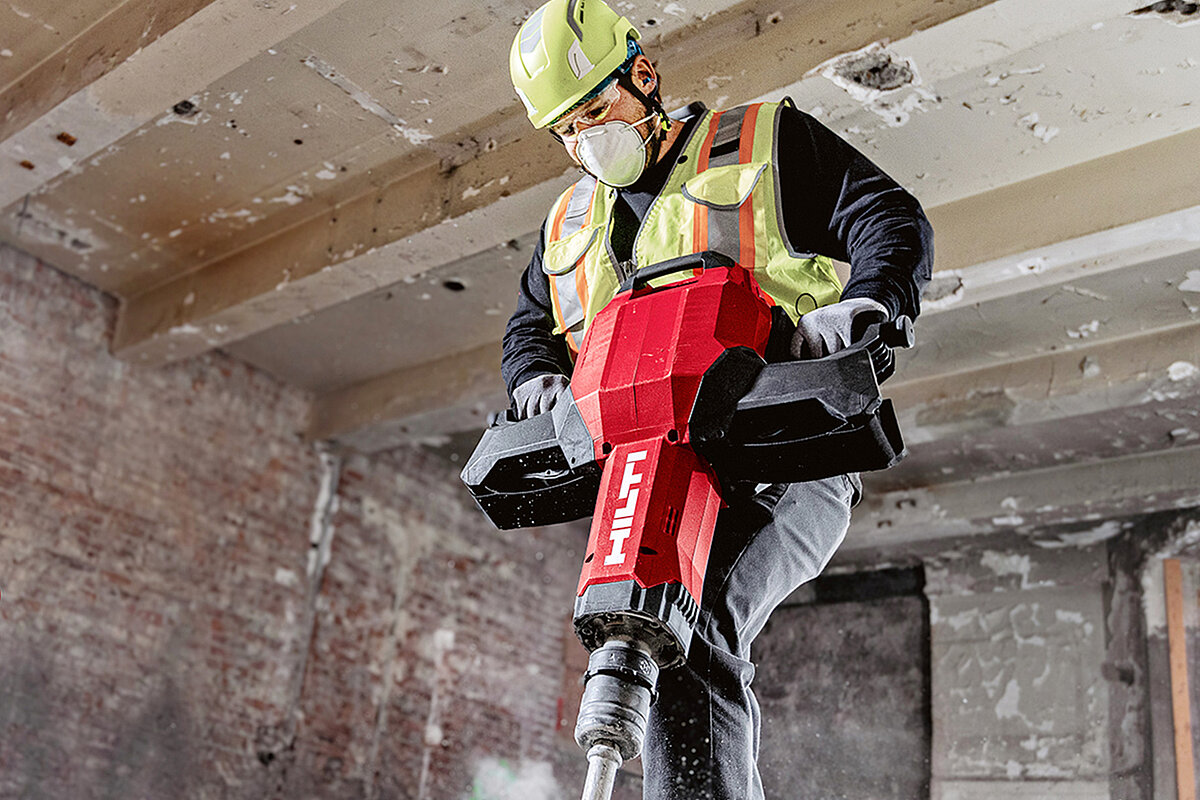
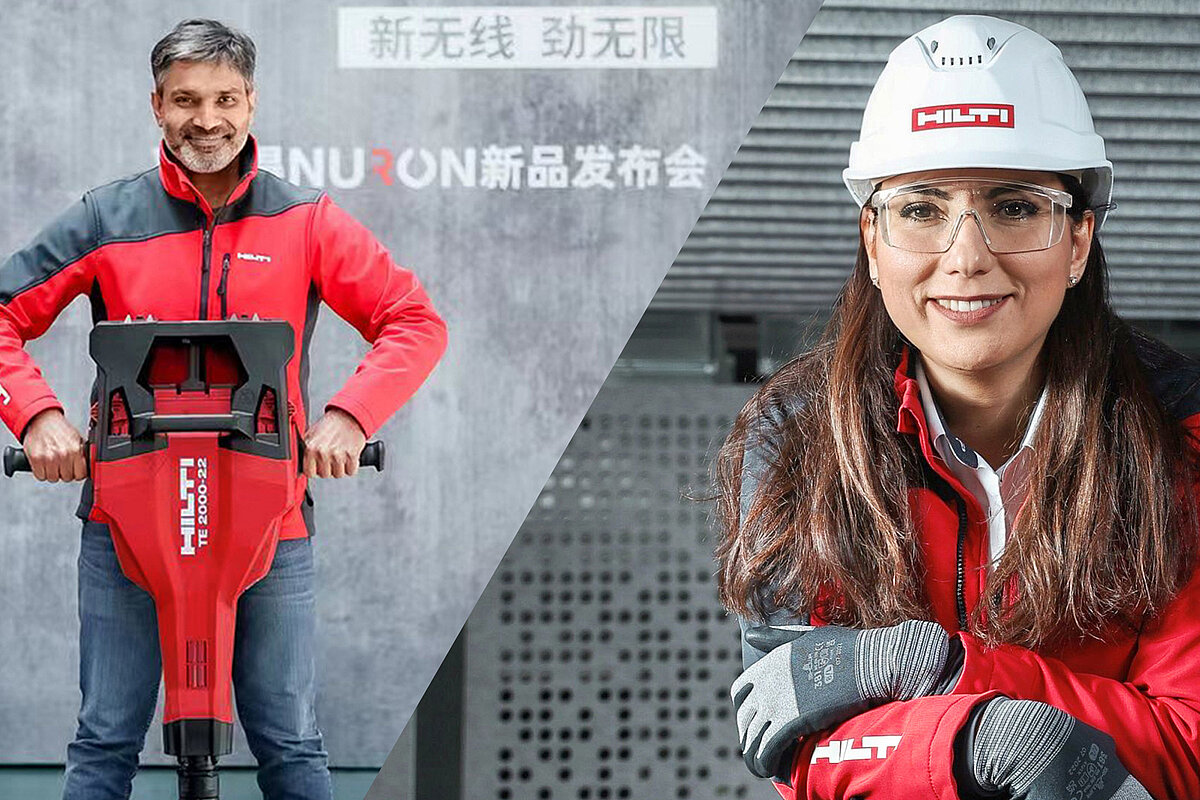
The Hilti Group continued to strengthen its innovation pipeline, with more than 70 new products and services launched in 2025, focusing on technology and product portfolio differentiation. In 2026, Hilti will launch Power Up, its new cordless heavy-duty power tool portfolio, building on the success of the 22-volt battery platform Nuron. Investments in research and development reached CHF 459 million, equaling 7.3 percent of Group sales. Hilti further expanded its production and supply network in the Americas, Eastern Europe and India to secure its long-term supply chain resilience in a dynamic and complex global environment.

Beyond hardware, Hilti’s services and solutions are continuously driving differentiation to support customers in becoming more productive. In 2025, Hilti’s software business gained further momentum with annual recurring revenue (ARR) growth of 28.0 percent and an established customer base of more than 25,000. 

At the end of 2025, the Hilti Group had 34,420 team members, an addition of 67 employees (+0.2%) compared to the previous year.

The operating result reached CHF 728 million in 2025, a decrease of 5.3 percent compared to the previous year (2024: CHF 769 million). The soft market environment, the strong Swiss franc and continued investments in the strategic priorities led to this decline. The currency effect on the operating result was CHF 38 million. With CHF 516 million, net income was 8.0 percent below the previous year (2024: CHF 561 million). Return on sales (ROS) declined slightly to 11.6 percent (2024: 12.0%). The Group’s capital employed increased by CHF 203 million to CHF 6.3 billion, whereas return on capital employed (ROCE) decreased by 1.1 percentage points to 11.8 percent (2024: 12.9%).

Free cash flow reached CHF 545 million (2024: CHF 379 million), leading to a cash flow conversion of above 100 percent. This is well above the long-term average target defined in the Group’s Lead 2030 strategy.

The equity ratio of 63 percent (2024: 61%) continues to be considerably above the minimum of 45 percent. Cash and cash equivalents amounted to CHF 1.2 billion (2024: CHF 0.9 billion). This includes the repayment of a CHF 150 million corporate bond tranche and the placement of two new tranches, each valued at CHF 100 million. Based on this solid business result, the Board of Directors proposes to pay out an ordinary dividend of CHF 257 million for the 2025 financial year (2024: CHF 279 million).

As part of its customer promise, the Group aims to be its customers’ best partner for sustainability, both through its innovative solutions and how it operates. The sustainability strategy is based on three pillars: caring for the environment, people and society. The 2025 sustainability statements detail how Hilti implements its sustainability strategy and are published with reference to the European Sustainability Reporting Standards (ESRS).

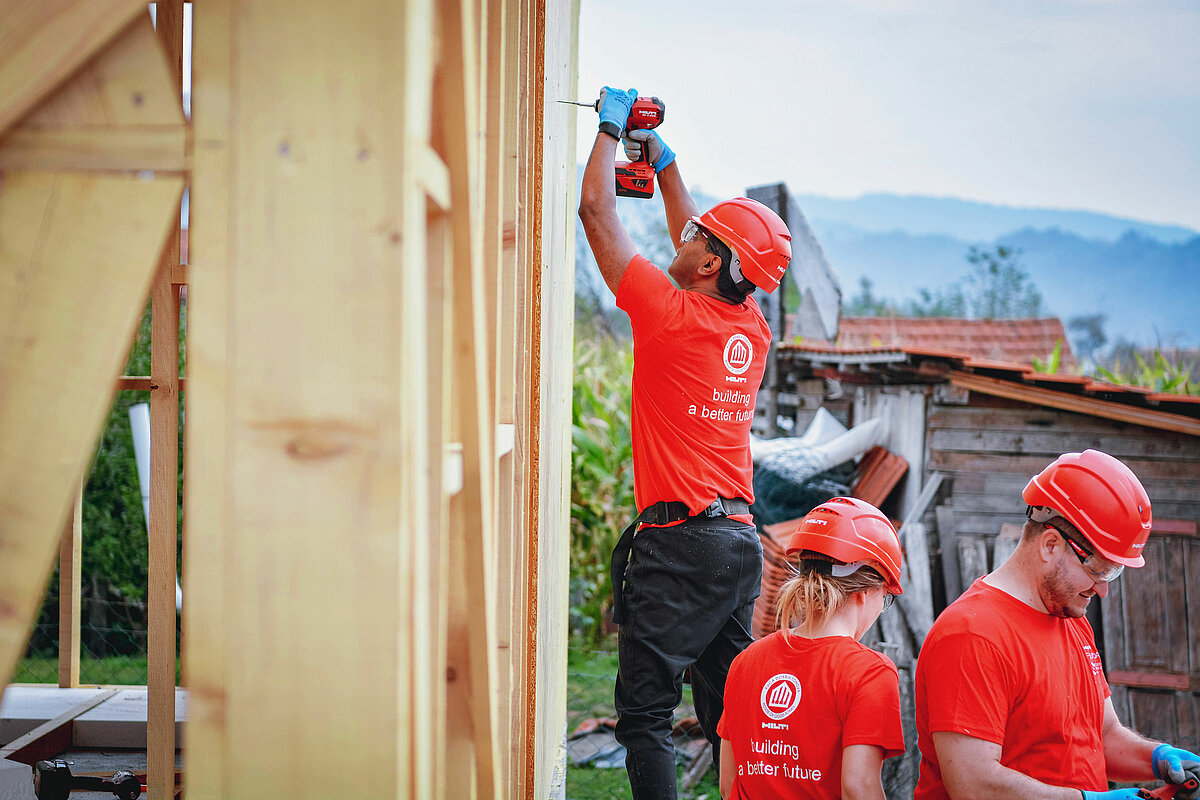
In addition to reaching carbon neutrality in its own operations (Scope 1 and 2 greenhouse gas (GHG) emissions) and business travel GHG emissions, the Group has established CO2-reduction targets validated by the Science Based Targets initiative (SBTi). In 2025, total Scope 1 to 3 GHG emissions were reduced by 8.4 percent from 1357 to 1243 kilotons, in line with these targets. The lost-time-incident rate (LTIR) was reduced by 25 percent to 2.52 compared to the prior year. Hilti’s employees demonstrated their strong commitment to society by volunteering a total of more than 91,000 hours (+23% compared to 2024) through Hilti’s volunteering program, Engaged Beyond Business (EBB). For its sustainability efforts Hilti was recognized with the EcoVadis silver medal, among the top 15 percent of participating companies, and ISS ESG Corporate Rating Prime status, among the top 10 percent of the industry cohort. In addition, the Hilti plant in Hungary received platinum certification from the German Sustainable Building Council (DGNB), while the plant in India received gold certification. The auditor, PricewaterhouseCoopers AG, provided limited assurance on both the sustainability metrics of GHG emissions and the LTIR. 

The development of the construction market is expected to remain uncertain in 2026. It is likely that the Swiss franc will remain strong during 2026 due to the ongoing geopolitical instability and trade barriers. 

In line with its strategy Lead 2030, Hilti will further strengthen its innovation pipeline in hardware, software and services. In addition to this, Hilti continues to invest in continuously improving customer experience.

In 2026, the Hilti Group expects low single-digit sales growth in local currencies with a similar ROS compared to 2025.

Financial Information